A slope needs a plan for the interval between disturbance and dependable vegetation. The application method alone does not define that protection. Identify the water pathways, exposed soil, receiving areas and project requirements, then have the responsible specialist specify how erosion and sediment will be managed. This guide helps an owner describe the problem and review responsibilities; it does not design controls, select a slope limit or certify a hydraulic treatment for an unassessed site.
Describe the entire slope setting
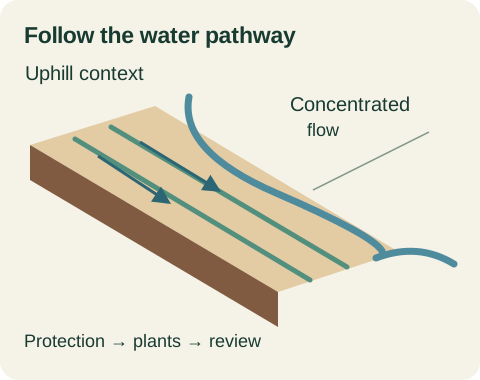
Record the treatment boundary, slope length, visible breaks and nearby features. Include land uphill that may contribute water and the place water goes after leaving the slope. The area receiving an application may be smaller than the area influencing its runoff. A photograph focused only on bare ground can omit the very feature responsible for repeated erosion.
State whether dimensions are measured, estimated or taken from a drawing. Include accessible photo locations rather than walking on unsafe ground. Ask the specialist what additional survey or site information is required. A planning sketch helps organize the conversation but cannot replace the measurements and interpretation needed for a design affecting structures, roads, drainage systems or waterbodies.
Distinguish erosion from sediment containment
Erosion concerns soil being detached and moved; sediment containment concerns managing material after it has moved. Ask which parts of the proposal address each task. A surface treatment may have a specified role without resolving all downstream sediment risk. The scope should explain the relationship between ground protection and any separate runoff or containment measures.
AAFC describes erosion from wind, water and tillage and notes that effectiveness of protection depends on weather, terrain and soil. Its agricultural discussion supplies useful physical context, not a construction-site design. Use it to understand why a bare-slope problem requires more information than square metres and a request for the strongest hydroseed mixture.
Identify concentrated flow explicitly
Mark visible channels, sediment fans and places where an uphill drain or hard surface discharges. Record when the pattern was observed and whether the feature is temporary or permanent. Concentrated flow deserves specific review rather than being treated as ordinary rainfall falling evenly across a seeded surface. Ask who assesses the route and whether changes or additional controls are required.
Do not improvise a diversion that sends water toward another property or unstable area. The useful first action is documentation and qualified assessment. If active erosion is threatening people, structures or infrastructure, contact the appropriate responsible party promptly. A seed application should not be used to delay addressing an immediate drainage or stability concern.
Specify the treatment's actual role
Request product identification, rate, implementation instructions and the conditions the treatment is intended to address. Distinguish seed placement from hydromulch or another specified erosion-control product. Ask whether separate passes, anchoring or additional measures are required by the approved plan. Similar visual colour does not establish equivalent performance between products or applications.
The Calgary ESC specifications discuss maintaining hydromulch or tackifier effectiveness until vegetation replaces that protection. This supports a sequence-based question: what provides the required protection today, what maintains it during establishment, and who authorizes the later transition? Keep that question separate from a general seed germination expectation or an estimate of the date the slope will look green.
Align the work with the applicable project requirements
For a construction project, identify the approved erosion and sediment control documents and responsible designer. Calgary's authorization framework can impose duties on smaller sites as well as larger ones. Do not assume a homeowner-sized treatment area automatically removes every construction or runoff obligation. Ask the relevant authority or project professional which requirements apply to the whole site.
Keep the project version and authorization information attached to the application scope. A proposed substitution or different sequence may need review by the person authorized to approve it. The installer should receive the actual implementation instructions, not only a quote stating erosion-control hydroseeding. Any uncertainty about the governing documents should be resolved before the work proceeds.
Plan the vulnerable intervals
List the period after grading, the interval before application and the time while vegetation develops. Identify what protection remains during each phase and who maintains it. A delay in one activity can extend another party's responsibility. State how the plan responds if weather, material supply or unsafe access postpones the installation.
For a hypothetical bank above a service road, the contractor may need temporary protection while a seed specification is being confirmed. That measure should have an inspection and maintenance owner. Later planting does not automatically end the temporary responsibility. Use the approved transition criteria and the authorized review process rather than a calendar assumption to determine when changes are appropriate.
Make inspections actionable
Choose safe observation locations and define what must be recorded: exposed areas, movement of material, damaged protection, blocked controls and off-site sediment are examples of useful topics. The actual frequency and qualification requirements come from the project and authority. Routine visits may need additional event-based inspections after conditions capable of causing a release.
Every observation should lead to a disposition: no action required under the stated criterion, further assessment, repair or escalation. Record who received the issue and when it was resolved. A collection of photographs without an assigned response is incomplete maintenance. The portal's time calculation can organize planned effort, but it does not establish compliance with a construction inspection requirement.
Review a slope proposal as a sequence
Imagine an exposed bank with an uphill paved area, one visible flow channel and a ditch below. The owner supplies photographs and the larger context instead of requesting an area-only price. A qualified review defines runoff and protection requirements. The application scope then identifies the specified treatment, temporary measures, safe access, records and establishment responsibilities.
The owner can now ask concrete questions: which control applies in the channel, what protects the remaining surface, who repairs damage and what evidence permits the handoff? Those answers make the proposal reviewable. They also show why a general promise that hydroseeding prevents erosion is too broad for a site whose main risks have not been assessed.
Sources + further reading
- City of Calgary: ESC authorizations
- City of Calgary: 2022 ESC standard specifications
- Agriculture and Agri-Food Canada: Soil erosion
Source review: 2026-10-04. Requirements and programs can change; confirm the current details with the authority or provider.