A native prairie site should not enter a standard lawn quotation merely because bare patches are visible. Existing vegetation, the soil seed bank, the disturbance history and the desired plant community may change whether seeding is appropriate at all. Begin with a qualified assessment and a clear restoration objective. Hydroseeding can then be considered as one possible placement method within that plan, rather than the starting assumption for every disturbed native area.
Protect what can remain intact
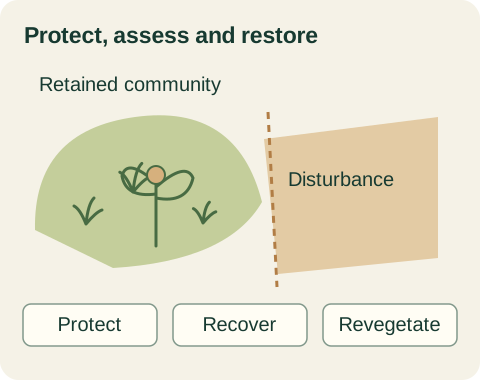
Alberta's native-grassland guidance emphasizes minimizing disturbance and using appropriate native vegetation for restoration where disturbance is unavoidable. Identify retained areas before setting access and treatment boundaries. Ask how equipment routes, stockpiles, turning movements and cleanup will avoid damaging those areas. A conservation boundary should be visible on the work drawing and understood by the crew.
Do not clear unfamiliar vegetation to simplify a quotation. Seek identification and an assessment of its role first. What appears untidy to a lawn owner may be part of the intended native community, while dense green cover may contain unwanted introduced plants. The preliminary objective is to understand what is present, not to impose an appearance standard from a maintained residential yard.
Define the target in ecological terms
Describe the community or functions the project seeks to recover, and identify the appropriate reference information. A general label such as Alberta native is too broad to settle local suitability. Ask a qualified practitioner about natural subregion, site moisture, soil and land-use context. Record who approves the vegetation target and how success will be assessed over time.
Alberta's range-health resources evaluate functions such as site stability, water processes and plant diversity, with assessment tied to the kind of community being examined. They demonstrate why a single green-cover percentage is incomplete. The portal's observation tool can compare entered values with entered criteria; it cannot perform a range-health assessment or determine whether a restored plant community functions appropriately.
Examine natural recovery as a real option
The provincial general-guidelines library includes guidance on sites reclaimed through natural recovery. That means seeding should be a decision supported by site information, not an automatic response to every disturbance. Ask whether retained topsoil, nearby vegetation, seed sources and the type of disturbance support that option, and what protection and monitoring would be required.
Natural recovery is not the same as abandoning exposed soil. A practitioner may still need to address erosion risk, unwanted vegetation, access and observation. Conversely, applying a mix can introduce competition or alter the intended recovery process. Compare the options against the target and risk assessment, including what evidence would trigger a change if the chosen process does not progress as expected.
Keep provenance and component identity visible
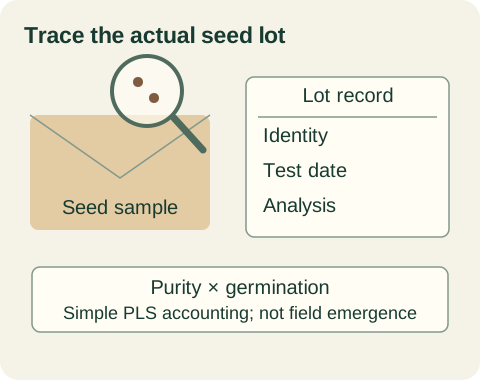
If planting material is required, request the information the restoration specification needs: component identity, origin or provenance where relevant, lot records and applicable analysis. Ask how availability and substitutions will be handled. The seed-selection decision should remain with the authorized practitioner rather than quietly shifting to whichever similar product is available on application day.
Do not assume a commercial native-labelled mix is appropriate for every natural region or disturbed site. Nor should a lawn or forage blend be treated as equivalent because it can produce quick cover. Keep the desired composition and any temporary-cover strategy separately documented. The project needs to explain why each material belongs in that specific setting and what later management it may require.
Review placement and carrier materials with the specialist
Native seed differs in form and establishment requirements. Ask whether the proposed placement method suits the specified material and whether carrier, amendments or tackifier introduce constraints. The responsible practitioner should approve tank additions and any separate passes required by the project. Avoid relying on a general hydraulic-method description to establish compatibility with every seed component.
Use product instructions and the approved specification to define quantities and implementation. The area calculator can account for a user-entered material rate, but it cannot determine that a rate or material is ecologically appropriate. Document any change in method as carefully as a seed substitution, because the target community and the planned placement conditions must remain connected.
Prevent new disturbance and unwanted introductions
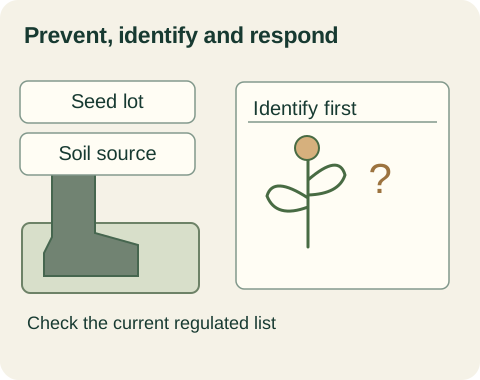
Map existing unwanted plants and request an appropriate prevention and management plan. Include equipment cleanliness, soil and material sources, retained-area protection and follow-up identification. Alberta's reclamation weed-awareness material explains the importance of seed-lot documentation and prevention; current regulated species should be checked against the present provincial list rather than an old presentation.
The same care applies to imported soil and temporary construction materials. A restoration plan can be undermined by an undocumented source introduced after the seed selection is complete. Assign the approval and recordkeeping responsibility for all relevant materials. These controls belong in procurement and site coordination, not only in a final note asking the crew to be careful.
Design monitoring around the target community
Choose observation locations that represent the disturbance and any retained reference areas, with the appropriate professional defining the method. Record composition, bare-ground patterns, site stability and other indicators relevant to the plan. Keep weather and management events in the same timeline. A repeat photograph is useful, but it may not distinguish similar species or measure ecological function.
Set review milestones appropriate to the project instead of promising a mature native community within a fixed lawn-establishment period. Explain who interprets progress and which conditions trigger intervention. If grazing, mowing or other management is planned, connect it to the approved recovery strategy. Routine turf instructions should not silently replace a specialist's native-site plan.
Compare two hypothetical disturbance responses
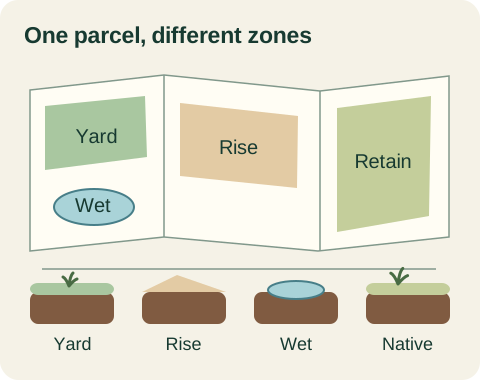
Imagine a narrow disturbed strip beside retained native grassland and a heavily altered material-staging area elsewhere. A practitioner may identify different recovery approaches for those zones after assessment. The owner records the target, protection boundaries and observation method for each. The application request covers only the work the approved plan actually calls for.
At review, the question is whether each area is moving toward its documented objective with acceptable stability and composition. A lush introduced stand does not automatically count as native recovery, and slow visible change does not automatically prove failure. Preserve the evidence and specialist interpretation. This makes a native-site project reviewable without inventing HAUSE ecological credentials or promising a result from seed placement alone.
Sources + further reading
- Government of Alberta: Guidelines for native grasslands
- Government of Alberta: General reclamation guidelines
- Government of Alberta: Range health
- Government of Alberta: Weed awareness for reclamation
Source review: 2026-10-04. Requirements and programs can change; confirm the current details with the authority or provider.